

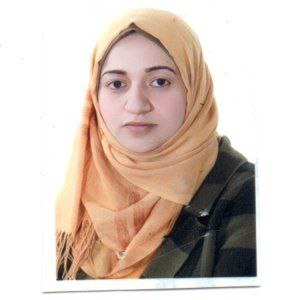
teba Ali Jasim
Research Interests
| Gender | FEMALE |
|---|---|
| Place of Work | Technical Engineering College for Computer and AI / Mosul |
| Department | Refrigeration and Air Conditioning Techniques |
| Position | Mosul Technical Institute |
| Qualification | Master's |
| Speciality | Software engineering |
| mti.lec74.teba@ntu.edu.iq | |
| Phone | 07705286782 |
| Address | Mosul /ALKfaat ALuwlaa, Nineveh, Mosul, Iraq |


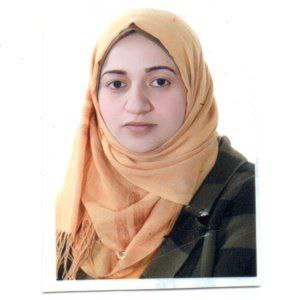
Education: Master’s Degree in Software Science – Specialization in Intelligent Technologies and Network Security.
1 +
Detecting Network Attacks Model Based on a Convolutional Neural Networ
2 +
Proposing a Model for Detecting Intrusion Network Attacks Using Machine Learning Techniques
3 +
Detecting Network Attacks Model Based on Long Short-Term Memory (LSTM
4 +
Sonar Data Classification Using Deep Learning Techniques
Skills
Artificial Intelligence in Cybersecurity and Digital Forensics (90%)
Academic Qualification
Master of Science (M.Sc.) in Software Engineering and Network Security
Jan 30, 2022 - Sep 30, 2025"Master’s program focused on advanced software engineering principles, secure network architectures, and cyber defense strategies
Working Experience
Software Engineering, Programming, Artificial Intelligence, Deep Learning, Academic Teaching [Assistant Lecturer]
Sep 26, 2025 - PresentSupervising students’ graduation projects and providing academic guidance.
Conducting research in artificial intelligence, deep learning, and software applications.
Publications
Sonar Data Classification Using Deep Learning Techniques
Dec 2, 2025Journal 2025 3rd International Conference on Business Analytics for Technology and Security (ICBATS), Dubai, United Arab Emirates, 2025
publisher Publisher: IEEE
DOI 10.1109/ICBATS66542.2025.11258274.
Volume pp. 1-7
This system prevents submarines used by the US Navy to monitor the country's coastline from entering illegally. Submarines send and receive sonar signals to identify marine organisms. Sometimes, the coastline may be threatened by mines, so these must be located. To determine whether an object within the submarine's range is a rock or a mine, it is necessary to examine the reflected sonar signals. Deep learning techniques are applied to predict and analyze data to solve the problem posed by this real-world scenario. This paper investigates the automatic detection and classification of objects located at the bottom of lakes using deep learning algorithms. Utilizing a sonar-based dataset, multi-layer deep neural networks were employed, achieving an accuracy of 99%. Furthermore, convolutional neural networks (CNNs) were applied, yielding an even higher classification accuracy of 100 %. We used a convolutional neural network (CNN) to classify sonar data, thanks to its ability to automatically learn key features without manual effort. It detects local patterns using filters, reduces model complexity through weight sharing-which improves training efficiency-and creates layered representations to better understand the data. Furthermore, it generalizes new data efficiently thanks