


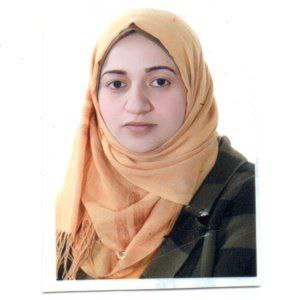
teba Ali Jasim
Research Interests
| Gender | FEMALE |
|---|---|
| Place of Work | Technical Engineering College for Computer and AI / Mosul |
| Department | Department of Cloud Computing and Internet of Things Techniques Engineering |
| Position | assistant lecturer |
| Qualification | Master's |
| Speciality | Software engineering |
| mti.lec74.teba@ntu.edu.iq | |
| Phone | 07705286782 |
| Address | Mosul /ALKfaat ALuwlaa, Nineveh, Mosul, Iraq |



Education: Master’s Degree in Software Science – Specialization in Intelligent Technologies and Network Security.
1 +
Detecting Network Attacks Model Based on a Convolutional Neural Networ
2 +
Proposing a Model for Detecting Intrusion Network Attacks Using Machine Learning Techniques
3 +
Detecting Network Attacks Model Based on Long Short-Term Memory (LSTM
4 +
Sonar Data Classification Using Deep Learning Techniques
5 +
Vehicular-to-Everything (V2X) Communication Using 5G NR for Autonomous Vehicles
Skills
Artificial Intelligence in Cybersecurity and Digital Forensics (90%)
Academic Qualification
Master of Science (M.Sc.) in Software Engineering and Network Security
Jan 30, 2022 - Sep 30, 2025"Master’s program focused on advanced software engineering principles, secure network architectures, and cyber defense strategies
Working Experience
Software Engineering, Programming, Artificial Intelligence, Deep Learning, Academic Teaching [Assistant Lecturer]
Sep 26, 2025 - PresentSupervising students’ graduation projects and providing academic guidance.
Conducting research in artificial intelligence, deep learning, and software applications.
Publications
Vehicular-to-Everything (V2X) Communication Using 5G NR for Autonomous Vehicles
Mar 8, 2026Journal Journal of EngineeringVolume 2026, Issue 1 8643947
publisher Publisher: IEEE
DOI https://doi.org/10.1155/je/8643947
Issue 1 8643947
Volume 2026
This paper explores the fundamental issue to conflicting performance requirements in 5G New Radio (5G NR) vehicle-to-everything (V2X) communications for autonomous driving applications. Unlike the previous literature where most of its studies consider single performance measures in a fixed or simplified environment, the proposed system presents a dynamic mathematical model that simultaneously represents the energy consumption, communication reliability, in the form of a packet delivery ratio, and end-to-end latency in dynamic and time-varying vehicular conditions. The model has been proven, and the validity of its implementation is reflected in large-scale simulations carried out in Python, with a dataset of more than 500,000 data points and a wide variety of traffic and mobility conditions. The findings make it evident that there is a strong inverse correlation that exists between vehicular density and the general level of communication quality, so that high traffic density results in a localized rise of the transmission delay and a grave decrease in the packet delivery performance. In addition, the analysis determines that there is a roughly linear trade-off between energy conservation and minimizing latency that indicates the tension that exists between these two ends. All these results emphasize the exceptional necessity of adaptive and context-aware resource management solutions in 5G NR V2X systems and can serve as a good quantitative benchmark to the design of further intelligent optimization and control algorithms.
Sonar Data Classification Using Deep Learning Techniques
Dec 2, 2025Journal 2025 3rd International Conference on Business Analytics for Technology and Security (ICBATS), Dubai, United Arab Emirates, 2025
publisher Publisher: IEEE
DOI 10.1109/ICBATS66542.2025.11258274.
Volume pp. 1-7
This system prevents submarines used by the US Navy to monitor the country's coastline from entering illegally. Submarines send and receive sonar signals to identify marine organisms. Sometimes, the coastline may be threatened by mines, so these must be located. To determine whether an object within the submarine's range is a rock or a mine, it is necessary to examine the reflected sonar signals. Deep learning techniques are applied to predict and analyze data to solve the problem posed by this real-world scenario. This paper investigates the automatic detection and classification of objects located at the bottom of lakes using deep learning algorithms. Utilizing a sonar-based dataset, multi-layer deep neural networks were employed, achieving an accuracy of 99%. Furthermore, convolutional neural networks (CNNs) were applied, yielding an even higher classification accuracy of 100 %. We used a convolutional neural network (CNN) to classify sonar data, thanks to its ability to automatically learn key features without manual effort. It detects local patterns using filters, reduces model complexity through weight sharing-which improves training efficiency-and creates layered representations to better understand the data. Furthermore, it generalizes new data efficiently thanks