

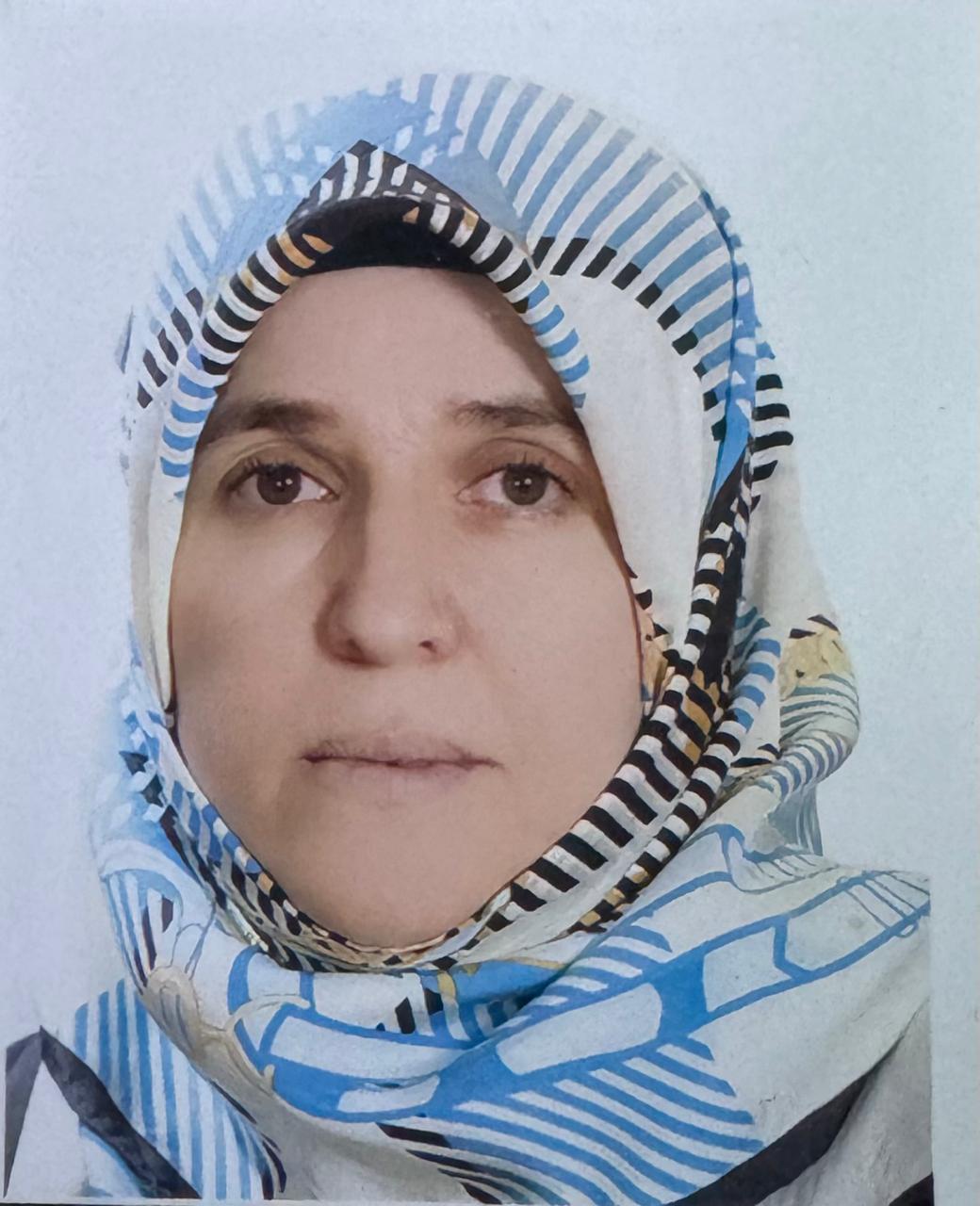
maysaloon A. al hashim
Research InterestsArtificial Intelligence (AI)
Internet of Things (IoT)
and Signal Processing
| Gender | FEMALE |
|---|---|
| Place of Work | Technical Engineering College for Computer and AI / Mosul |
| Department | Department of Artificial Intelligence Engineering Techniques |
| Position | Assistant professor |
| Qualification | PhD |
| Speciality | electronic and computer |
| maysloon.alhashim@ntu.edu.iq | |
| Phone | 07716887757 |
| Address | mosul - hay alsideeq, Nineveh, mosul, iraq |





Skills
digital signal processing (73%)
pattern recognition (77%)
speech processing (80%)
Artificial Intelligence (78%)
Deep Learning and Neural Networks (85%)
Supervision
Nabaa Mohammed Khaleel
Year: 2024Academic Degree: Master
Supervisor Type: Supervisor
Supervisor State: Ungraduated
Mosab Mohammed Jasim
Year: 2024Academic Degree: Master
Supervisor Type: Supervisor
Supervisor State: Ungraduated
Academic Qualification
Bsc
Sep 1, 1991 - Jul 1, 1995Msc
Sep 12, 2003 - Apr 26, 2005Phd
Sep 12, 2014 - Jul 25, 2019Publications
A novel method for examining promoters using statistical analysis and artificial intelligence learning
Oct 5, 2025Journal IAES International Journal of Artificial Intelligence (IJ-AI)
publisher Institute of Advanced Engineering and Science
DOI 10.11591/ijai.v14.i5.pp4006-4016
Volume 14
Accurately classifying promoters has become a significant focus in bioinformatics research. Although numerous studies have attempted to address this challenge, the performance of existing methods still leaves room for improvement this study, statistical feature analysis has been applied to the features that have been developed in our previous work. This approach extracted additional informative features from basic sequence characteristics and then used them together with the original and newly engineered features. Utilizing statistical feature analysis enhanced key patterns, which lead to an improvement in the accuracy of the promoter classification. Results demonstrated that our proposed method outperforms other models that use only basic features. The value of the area under the curve (AUC) of 0.83958 achieved when using the combined feature set confirmed the effectiveness of our approach. Furthermore, the AUC value reached 1 when these optimized features were used with naive Bayes (NB) classifier, referring to the strength of incorporating statistical analysis into feature design.
New Features Developed for the Detection of a Promoter Based on Machine Learning
Jul 29, 2025Journal 2025 4th International Conference on Electronics Representation and Algorithm (ICERA)
publisher IEEE
DOI 10.1109/ICERA66156.2025.11087274
A promoter is a brief section of DNA that initiates RNA polymerase transcription of a gene. Usually, it's situated right upstream of the transcription start point. Numerous human illnesses, including diabetes, cancer, and Huntington's disease, have been shown to have a genetic promoter as their major cause. As a result, categorizing promoters has emerged as a fascinating issue that many bioinformatics experts are interested in studying. Numerous studies were carried out to address this issue. However, their performance outcomes still need to be improved. This study presents a challenge by providing a novel set of engineered capabilities to improve classification between promoter and non-promoter sequence (PS and n_PS) types. The urgency of the studies lies inside the want for more interpretable, green models that may work nicely with restricted biological statistics. have been compared between the extracted classical and newly developed features (such as; consisting of nucleotide composition and counting, G_C content material, k-mer frequency, and sequence complexity) classify to differentiate PS from nPS. Using the MATLAB environment, we evaluated five device learning models (SVM, KNN, LR, DT, and NB) at the benchmark UCI dataset. The proposed feature set significantly improved the category's overall performance. Naïve Bayes achieved a percentage of 100 % for accuracy, sensitivity, specificity and F1score when using the new feature structure. In contrast, accuracy, sensitivity and F1-score were 94%, 93% and 90% respectively when basic features were used. These consequences validate the effectiveness of the developed capabilities and their biological interpretability. This looks at a promising technique for promoter prediction with interpretable, reproducible consequences. Future work will consist of validation on large datasets, including EPD and ENCODE, to ensure broader applicability.
DNA Sequence Identification via Biologically Guided Feature Engineering and Hybrid ML–LSTM Networks
Jul 10, 2025Journal Journal of Intelligent Systems and Internet of Things
publisher American Scientific Publishing Group (ASPG)
DOI https://doi.org/10.54216/JISIoT.180222
Issue 2
Volume 18
The promoter is the part of DNA, which is responsible of initiating RNA polymerase transcription of a gene. The location of this part of DNA is upstream the transcription start site. According to researches, the genetic promotors contribute majorly in many human diseases such as cancer, diabetes and Huntington’s disease. Therefore, promotor detection corresponds as a very crucial task. In this study, a hypered detection system, which integrates biologically developed feature extraction with traditional machine learning (ML) algorithms in addition to use Long Short-Term Memory (LSTM) network as a deep learning approach, has been proposed. The dataset used includes 106 nucleotide sequences. Results obtained from the study show that the perfect performance across all metrics (accuracy, sensitivity, specificity, precision, and F1-score) has been achieved when Naive Bayes used as a classifier, which reach 100% and AUC=1.The confusion matrix analyses and ROC curve confirm that LSTM model achieved 100% training accuracy and 84.38% test accuracy. The architecture and performance of the proposed model make it applicable in IoT-based intelligent genomic and healthcare systems, which enabling real-time and remote promoter detection.
An Artificial Intelligence Approach for Verifying Persons by Employing the Deoxyribonucleic Acid (DNA) Nucleotides
Nov 17, 2023Journal Journal of Electrical and Computer Engineering
publisher John Wiley & Sons
DOI https://doi.org/10.1155/2023/6678837
Volume 2023
Deoxyribonucleic acid (DNA) can be considered as one of the most useful biometrics. It has effectively been used for recognizing persons. However, it seems that there is still a need to propose a new approach for verifying humans, especially after the recent big wars, where too many people lost and die. This approach should have the capability to provide high personal verification performance. In this paper, a personal recognition approach based on artificial intelligence is proposed. This approach is called the artificial DNA algorithm for recognition (ADAR). It utilizes a unique identity for each person acquired from DNA nucleotides, and it can verify individuals efficiently with high performance. The ADAR has been designed and applied to multiple datasets, namely, the DNA classification (DC), sample DNA sequence (SDS), human DNA sequences (HDS), and DNA sequences (DS). For all datasets, a low value of 0% is achieved for each of the false acceptance rate (FAR) and false rejection rate (FRR).
Clinical Fusion for Real-Time Complex QRS Pattern Detection in Wearable ECG Using the Pan-Tompkins Algorithm
Jun 17, 2023Journal Fusion: practice and applications
publisher American Scientific Publishing Group (ASPG)
DOI https://doi.org/10.54216/FPA.120214
Issue 2
Volume 12
This scientific paper presents a novel approach of real-time signal analysis in electrocardiogram (ECG) monitoring systems, focusing on the integration of device design,algorithm implementation for accurate measurement and interpretation of heart activity. The proposed system leverages a low-cost framework, employing a microcontroller and Arduino programming language for raw ECG data acquisition, while utilizing the AD8232 sensor and ESP8266 Node MCU for continuous patient monitoring. The acquired data is processed, stored, and analyzed using the Pan-Tompkins algorithm, which effectively filters and analyzes heart signals, including noise reduction and QRS complex detection. Two case studies involving a healthy individual and a patient with Myocarditis were conducted to demonstrate the effectiveness of the system. The integration of device design and algorithm development in ECG analysis is emphasized, highlighting the affordability, wearability, and potential for continuous monitoring and early detection of heart conditions. By successfully mitigating noise-related challenges, the implementation of the Pan algorithm enables accurate signal analysis. This interdisciplinary research contributes to the advancement of ECG interpretation and underscores the significance of clinical fusion between designed systems and applied algorithms on real cases. The performance of two Pan-Tompkins based QRS complex detection algorithms was systematically analyzed, offering valuable insights for their reasonable utilization.
Multimedia Imaging System of Data Collection and Antenna Alignment for Unmanned Aerial Vehicles Based Internet of Things
Jun 9, 2023Journal Fusion: practice and applications
publisher American Scientific Publishing Group (ASPG)
Issue 2
Volume 12
Because network of sensors gives a more accurate representation of remotely sensed environments, a network of wirelessly connected sensors is essential. Data packets must be routed to the base station hop by hop, which causes conventional network data collecting to use a lot of power. Unmanned aerial vehicles (UAV) were employed for hovering over the detected environment and gather data to solve this issue. The paper also aims to provide an automatic alignment for UAV antennas for tracking by utilising computer vision technologies. A directional antenna with high gain is used by a ground station that can operate by a pan-tilt to point towards the low-gain omnidirectional antenna carried by the UAV. To center the UAV's antenna's image in the frame, the antenna is equipped with a camera, and a computer detects the video and controls the pan-tilt. The antennas are aligned if there are no more than a few pixels between the UAV image center and the image center. The proposed imaging system exhibits fast data collection, thus attaining a high packet delivery rate and the minimum use of energy. With the suggested antenna auto-alignment approach, the antennas can be accurately aligned with an angle error of under one. UAVs must take the smoothest and shortest pathways possible to accommodate their motion and time constraints. As a result, the Traveling Sales Problem (TSP) is utilized to determine the shortest route, and Bezier curves are then employed to turn paths into a flyable path. © 2023, American Scientific Publishing Group (ASPG). All rights reserved.
Healthcare Monitoring COVID-19 Patients Based on IoT System
Jun 8, 2023Journal Bionatura
publisher American Scientific Publishing Group (ASPG)
DOI 10.21931/RB/CSS/2023.08.04.24
Issue 4
Volume 8
At the beginning of the Coronavirus disease 2019 (COVID-19) pandemic, the world needed to develop an innovative, accurate system for caring for and following up with patients remotely to reduce the massive influx of patients into hospitals. Therefore, the well-established Internet of Things (IoT) technology was used to build an applied model for health care. The main objective of this study was to create a system connected to an application that allows continuous remote and early detection of clinical deterioration by monitoring different levels of biometrics to reduce the patient's risk of serious complications. Assessments were conducted on four subjects (two males, two females) aged 30-50 years with COVID-19. The system was examined under conditions and medical supervision in the hospital, following a schedule of vital measurements (oxygen saturation rate, heart rate and temperature). An average of 4 examinations was recorded per day over a week. The model has recorded the mean of error of oxygen saturation rate (SpO2), pulse rate, and body temperature as (0.3975%), (0.2625%) and (2.925%) for four patients. © 2023, Clinical Biotec, Universidad Catolica del Oriente (UCO). All rights reserved.
Classifying healthy and infected Covid-19 cases by employing CT scan images
Dec 6, 2022Journal Bulletin of Electrical Engineering and Informatics
publisher Institute of Advanced Engineering and Science (IAES)
Issue 6
Volume 11
A broad family of viruses called coronaviruses may infect people. The infection's symptoms are often relatively minor and resemble a normal cold. Since the coronavirus disease of 2019 (Covid-19) has never been observed in humans, anyone can contract it, and no one has an innate immunity to it. The detection of Covid-19 is now a critical task for medical practitioners. computed tomography (CT) scans can be considered as the best way to diagnose Covid-19. For patients with severe symptoms, imaging might help to assess the seriousness of the disease. Also, the CT scan can be helpful for determining a plan of care for a patient. This work focuses on classifying Covid-19 cases for healthy and infected by presenting a powerful scheme of recognizing CT scan images. In this study will be provided by proposing a model based on applying deep feature extractions with support vector machine (SVM). Big dataset of CT scan images is employed, it is available in the repository of GitHub and Kaggle. Remarkable result of 100% have been benchmarked as the highest evaluation after investigations. The proposed model can automatically detect between healthy and infected individuals.
A CUSTOMIZED IOMT- CLOUD BASED HEALTHCARE SYSTEM FOR ANALYZING OF BRAIN SIGNALS VIA SUPERVISED MINING ALGORITHMS
Feb 2, 2022Journal Journal of Engineering Science and Technology
publisher Taylor's University
The study of human-computer interaction has been transformed by Signal Analysis of the Brain (SAoB). The ability to analyze human brain activity opens new opportunities for SAoB study. A medical imaging tool known as ElectroEncephalography (EEG) is the most effective way for doctors to diagnose patients with brain disorders by examining the characteristics of their brain scans. The need for a cloud-based Internet of Medical Things (IoMT)-based healthcare system is critical case in order to make better decisions in SAoB. EEG data are used in this study to make predictions about EEG signal classification using prior knowledge. We used supervised mining methods to distinguish between two types of EEG (Normal and Abnormal). Reduction of dimensionality and extraction of a feature are implemented on the EEG dataset to obtain high-level features which assisted to increase the efficiency and accuracy of the supervised mining algorithms. To quickly identify signal analysis cases from EEG data, this work proposes eight supervised mining algorithms, namely Artificial Neural Network (ANN), K-Nearest Neighbor (K-NN), Decision Table (DT), Support Vector Machine (SVM), One Rule (OneR), Decision Stump (DS), Zero Rule (ZeroR), and Random Forest (RF). After choosing the important features, these eight algorithms were sorely tested in an experiment. On an EEG dataset. Seven of the eight algorithms tested yielded results with greater than 90% accuracy and the ANN algorithm is the best because it achieved 97% but its take longer time in implementing (42 second). Based on these findings, we believe that these seven algorithms provide excellent and precise EEG signal identification and processing. Additionally, this research proposes a personalized health care system based on IoMT-cloud based SAoB and studies EEG brain classification. © 2022 School of Engineering, Taylor's University.