

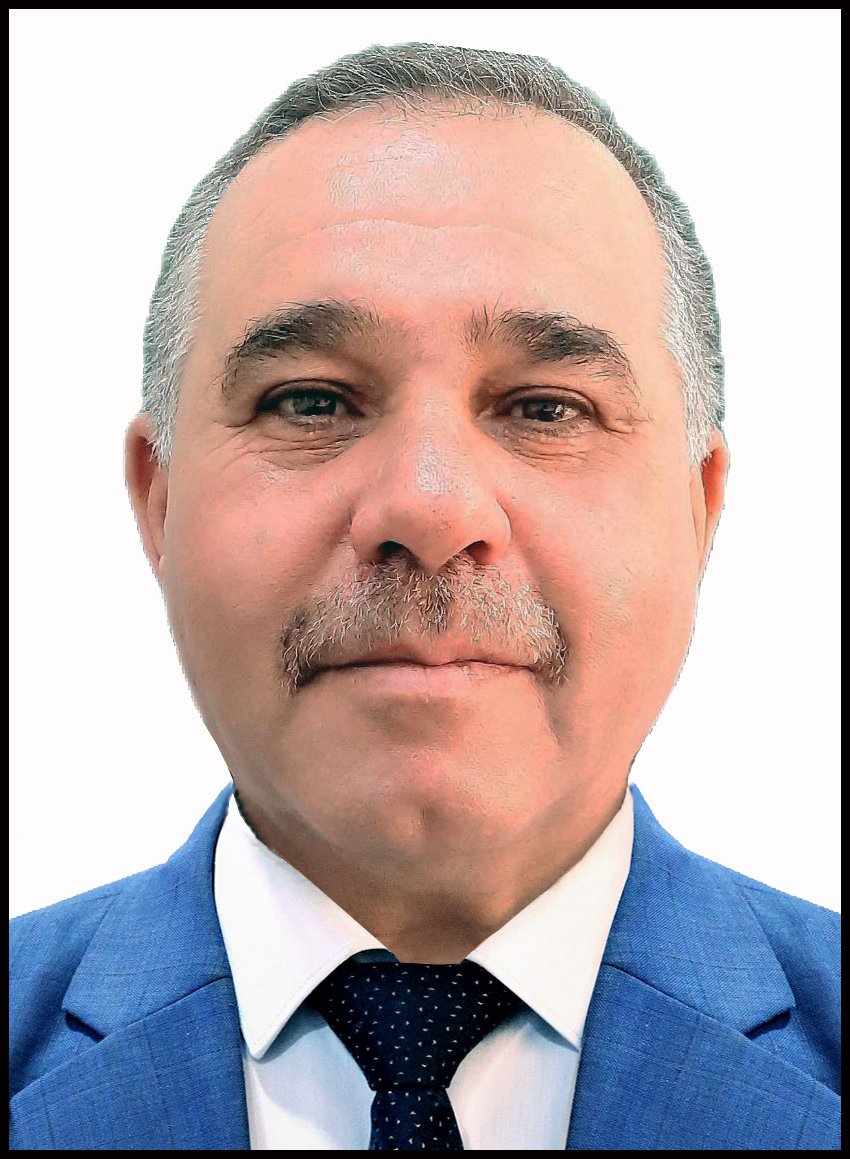
ZIAD SAEED MOHMMED SALEEM
Research InterestsELECTRONIC & COMMUNICATION ENG.
SOLID STATE ENG.
AI. ENG.
SOLAR CELLS POWER CONVERSION
SWITCHED CAPACITOR NETWORKS
IoT
RESISTIVE SWITCHING
SOLAR CELLS FABRICATION
IMAGE PROCSSING
CONTRPL SYSTEMES
Cost Minimization of GPS-GSM Based Vehicle Tracking System
| Gender | MALE |
|---|---|
| Place of Work | Technical Engineering College for Computer and AI / Mosul |
| Department | Department of Computer Engineering Techniques |
| Position | Lecturer |
| Qualification | Ph.d |
| Speciality | Electronic and Communications solid state Engineering |
| dr.ziadsaeed@ntu.edu.iq | |
| Phone | 009647738501692 |
| Address | 88k/257, Mosul-Algadida, Mosul, Iraq |




Skills
ELECTRICAL ENG.ANALYSIS AND SYNTHESIE (90%)
CONTROL ENG.ANALYSIS (100%)
SEMICONDUCTORS MANUFACTURING-SOLAR CELLS (100%)
ELECTRONIC SIMULATION PROGRAMS (85%)
DIGITAL SIGNAL PROCESSING LAB. (90%)
PROJECT MANAGEMENT (90%)
THERMAL evaporation system for coting semiconductor thin film layers (100%)
MATLAB, SCAPS, EWB, MULTISIM, prog. (90%)
MICROSOFT OFFICE (100%)
WATER STATION PROJECTS (90%)
Experience in organizing estimation reports for maintenance (100%)
Experience in managing computer centers and working on numerous programs. (100%)
AI-IN ELECTRONIC ENG. (60%)
Supervision
Lamis Ali Hussein Ali
Year: 2025Academic Degree: Master
Supervisor Type: Supervisor
Supervisor State: Graduated
Design and Implementation of Bidirectional System for Sign Language Communication using a Robotic Hand
Hayder Nasser Bahjat AL-Sammak
Year: 2023Academic Degree: Master
Supervisor Type: Supervisor
Supervisor State: Graduated
Design and Implementation of an Intelligent Monitoring and Management System Based on Internet of Things for Agriculture Application
Ahmed Yassin Ali
Year: 2023Academic Degree: Master
Supervisor Type: Supervisor
Supervisor State: Graduated
Machine Learning for Safety of Car Driver by Detection Arrhythmia for ECG using Heartbeat Sensor
Hadi Akram Hadi
Year: 2020Academic Degree: Master
Supervisor Type: Supervisor
Supervisor State: Graduated
Improving the Quality of Multimodality Medical Images Fusion Using Discrete Wavelet Transform )DWT)
Fatima Nadhim Ameen
Year: 2018Academic Degree: Master
Supervisor Type: Supervisor
Supervisor State: Graduated
"Design and Implementation of GPS and SMS Based Moving Object Tracking System" A thesis submitted to the council of Technical College / Mosul as a partial Fulfillment of the requirements for the technical master degree in computer Technology engineering.
Academic Qualification
PHD. ELECTRONIC&COMMUNICATION (SOLID STATE) ENG.
Nov 9, 2010 - Oct 4, 2015PhD in Solid State Electronics and Communications Engineering, specializing in improving the power conversion efficiency of solar cells using high light-absorbing materials in the fabrication of laboratory cell prototypes and their layers.
MSc. ELECTRONIC ENG.
Oct 4, 1998 - Apr 7, 2001MSc in Electronic Engineering, specializing in sensitivity analysis of large Switched capacitors networks.
BSc. ELECTRICAL ENG.
Sep 29, 1985 - Jul 12, 1990BSc in Electrical Engineering (General Electrical Engineering), specializing in electronics, communications, power, and electrical machines
Working Experience
electrical network ,transmission line , maintenance [work in electrical network transmission maintenance]
Jan 13, 1993 - Dec 31, 2001work in electrical network transmission maintenance
water stations , projects. [water stations and projects.]
Apr 23, 1999 - Mar 22, 2001water stations and projects.
evaporation system , coting semiconductor, thin layers [3 years used a system evaporation system for coting semiconductor thin layers]
Jul 4, 2012 - Apr 1, 20133 years used a system evaporation system for coting semiconductor thin layers
manufacturing, a sampl, laboratory solar cell [manufacturing a sample of laboratory solar cell]
Dec 6, 0012 - Mar 9, 2012manufacturing a sample of laboratory solar cell
simulation programs, in electronic engineering, MATLAB, SCAPS, EWB, MULTISIM [Using many useful simulation programs in electronic engineering such as MATLAB, SCAPS, EWB, MULTISIM]
Feb 5, 2006 - Mar 12, 2009Using many useful simulation programs in electronic engineering such as MATLAB, SCAPS, EWB, MULTISIM
Publications
Cost Minimization of GPS-GSM Based Vehicle Tracking System
Nov 27, 2028Journal IEEE
publisher Institute of Electrical and Electronics Engineers Inc.
DOI 10.1109/ICOASE.2018.8548857
Issue ISBN 978-153866696-8
Abstract Many vehicle tracking systems are based on Global Positioning System (GPS) and Global System for Mobile communications (GSM) due to the wide areas covered by these services. In these systems, the GPS coordinates of a moving vehicle is encapsulated in an SMS and transmitted to the monitoring server. In this paper, a GPS-GSM based system is designed and implemented to economically track vehicles moving over wide geographical areas. A scheme is proposed to reduce the number and cost of the used SMS messages. Performance evaluation under hypothetical and practical test cases showed the capability of the proposed system to achieve significant cost reduction. The proposed system also provides a trade-off between cost reduction and tracking accuracy. This enables the designer to select suitable system parameter values to minimize the cost for a given level of tracking accuracy.
ArSLR-ML: A Python-based machine learning application for arabic sign language recognition
Jun 1, 2025Journal Software Impacts
publisher Elsevier B.V
DOI e: https://doi.org/10.1109/ICETI63946.2024.10777193.
Issue 1
Volume 24
A B S T R A C T The ArSLR-ML is a real-time interactive application that uses multi-class Support Vector Machines (SVM) machine learning applied in the classification procedure and MediaPipe in the feature extraction procedure to recognize static Arabic sign language gestures, focusing on numbers and letters and translating them into text and Arabic audio output. The ArSLR-ML was built within the PyCharm IDE using Python with a graphical user interface (GUI), thereby allowing for effective recognition of gestures. The application utilizes the laptop camera and GUI to capture hand gestures to create dataset for machine learning models and implement them in real time.
Premature Ventricular Contraction Recognition Using Support Vector Machine (SVM) Based on Wireless Communication Protocols with Medical Sensor ECG
Jan 1, 2025Journal Lecture Notes in Networks and Systems
publisher Springer Science and Business Media Deutschland GmbH
DOI DOI: 10.1007/978-981-97-2671-4_44
Issue 23673370
Volume 977 LNNS
Abstract The signal under consideration is a biologically significant indicator utilized to diagnose heart disorders, as it exhibits the cyclic contraction and relaxation patterns of the myocardial muscles in the human heart. This noninvasive tool is crucial in identifying life-threatening heart conditions, such as abnormal electrocardiogram (ECG) heartbeats and arrhythmias, which can lead to death. Premature ventricular contraction (PVC), one of the most prevalent arrhythmias, arises from the ventricular region of the heart and has the potential to induce palpitations, cardiac arrest, and various other symptoms that may impede a patient’s daily functioning. To reduce doctors’ workload in assessing heart arrhythmia and disease, computer-assisted techniques are now used to diagnose them automatically. This study proposes a machine learning (ML) methodology for the identification of PVCs using the MIT-BIH arrhythmia database. The feature extraction method entails the computation of ten distinct features related to heartbeats. Three morphological aspects, including R wave amplitude, QRS complex duration, and QRS complex shape, were examined. Additionally, seven statistical features were calculated for each signal. These features were derived from 8 s of ECG data, resulting in a feature vector. A support vector machines (SVM) model was utilized to analyze these features, identify distinct patterns, and improve classification accuracy. The outcomes highlight the substantial enhancement in diagnostic performance. © The Author(s), under exclusive license to Springer Nature Singapore Pte Ltd. 2025.
Static Arabic Sign Language Recognition in Real Time Using Machine Learning and MediaPipe
Dec 3, 2024Journal nstitute of Electrical and Electronics Engineers Inc
publisher nstitute of Electrical and Electronics Engineers Inc.Elsevier B.V.,
DOI 10.1109/ICETI63946.2024.10777193
Abstract Sign language is a form of visual communication used by individuals who are deaf or hard of hearing to communicate. This visual language relies on gestures, handshapes, facial expressions, and body movements to convey meaning rather than spoken words. Therefore, to improve the lives of deaf or hard of hearing people in the Arab community, a more comfortable approach to learning and working must be developed. This paper presents an interactive computer vision-based system for recognizing static hand gestures (letters and numbers) in Arabic sign language in real-time. The MediaPipe framework is used to extract features (hand landmarks) from each image, and a support vector machine to recognize the static gesture inputted in front of the camera and then translate it into its equivalent text and voice, an approach developed to bridge the communication gap between deaf and hearing people. Experiments were conducted using HopeArSL, a large dataset that collected 12,000 images of 40 Arabic sign language gestures. This approach's experiments showed 100% and 99.94% training accuracy for numbers and alphabet letters, respectively. The accuracy and average response time in real-time for numbers and alphabet letters were (98.08%, 1.43 ms) and (99.09%, 7.48 ms), respectively. © 2024 IEEE.
Advancements in Robotic Systems for Sign Language Representation: A Review
Oct 7, 2023Journal European Journal of Interdisciplinary Research and Development
Issue 2
Volume 20
ABSTRACT When compared to spoken language, sign language offers a rich linguistic medium that is essential for the deaf and hard-of-hearing community. In order to close the communication gap, there is a great need for the development of robotics and robotic hands that are capable of accurately understanding and replicating sign language gestures. In this review paper, academic research and technological advancements are integrated. A variety of robotic system development methods and tools are presented, and used to interpret and create sign language, it also covers the difficulties and potential uses of these systems' technical advancement. Robotic systems can represent sign language in a variety of ways, including humanoid robots, signing avatars, robotic arms, robots that can be remotely viewed, gesture-controlled robots, and custom-built systems. Each has advantages and disadvantages, and the choice is based on the specific use case and requirements. Also, the paper discusses how human-robot interaction improves sign language representation and how robotic systems can help deaf and hard-of-hearing people learn, It shows how they affect learning and life. These systems can be used in research, education, and interactive settings. The comprehensive review of robotic systems for sign language representation will help researchers and practitioners advance inclusive communication technologies.
Solid State Devices Used in Combining Coding and Phase Modulation
Sep 1, 2023Journal Al-Rafidain Engineering Journal (AREJ)
Issue 2
Volume 28
The current project dealing with communication system through adoption of the particular digital modulation by using solid state components as a semiconductor device, using the phase-Shift keying (PSK) signal that has been adopted by combined coding with phase modulation. To increase the coded signal's minimum free distance as an objective of the work, by using the coding (Channel Coding) is a preferred approach to enhance the signal to noise ratio (SNR) performance of the transmission of digital signals, and for completing of the project task, a simulation methodology has been implemented the required investigation. The results reveal that the minimum free distance is equal the root of 2, ie D= 1.414, the output encoder with rate of 2/3 ie 8-PSK signal and the change of phase of the signal point does affect the minimum free distance of the coded signal.
Detection Arrhythmia from Electrocardiogram signal for automatically parking the car base on internet of things (IOT): A Review
May 20, 2023Journal Eurasian Journal of Engineering and Technology
Issue 2
Volume 18
Internet of things (IoT) work and communication technologies in smart farm irrigation management: a survey
Sep 9, 2022Journal NTU Journal of Engineering and Technology
Issue 3
Volume 1
ABSTRACT Iraq, the country of the two rivers, was affected during the past two seasons by drought as a result of the lack of rain, which led to a decrease in agricultural production, and with the emergence and expansion of IoT, his research took a new space in the treatment of water management. Through this study, we aim to identify scientific research on technologies related to smart irrigation using IoT. Where 35 research articles were reviewed after surveying 80 research titles, the parameters that are monitored and controlled by sensors and communication technologies were mainly and broadly analyzed, as well as expanded on some topics of specific challenges and recommendations in this field. This study will provide researchers with an opportunity to serve as a resource for them, and additional communication technologies specialized in agriculture will be required to accomplish a long-term vision in the development of smart agriculture.
Performance improvement of stand-alone induction generator using distribution SSC for wind power application
Apr 5, 2022Journal Bulletin of Electrical Engineering and Informatics
publisher nstitute of Advanced Engineering and Science
Issue 2
Volume 11
Abstract Self-excited induction generators (SEIGs) are used in wind turbine system because of high reliability, rigidity, simple structure, and capability to work under severe badly operating conditions. This type of generator has a poor terminal voltage and frequency regulation during changing the connected loads due to the absence of constant excitation current. Therefore, it is essential to stabilize the generated voltage and frequency besides suppress the injected harmonic current components. In this work, the dynamic performance of SEIG with distribution static series compensator (DSSC) is analyzed. The DSSC based on neuro-fuzzy controlled (NFC) is applied to control both voltage and frequency to enhance the regulation of SEIG. The NFC is used to control the DSSC which leads to balance the requirement of the reactive and active power of stand-alone grid under load variation and attempts to obtain a constant terminal voltage. The model is simulated using MATLAB/Simulink. The NFC structure designed to regulate and control the output voltage of the SEIG driven by a wind turbine to feed a consumer in remote and rural places. Furthermore, the power system parameters calculated depending on the d-q theory. Modeling results explained that the suggested controller is consistent and tough related to the conventional types. © 2022, Institute of Advanced Engineering and Science.
A Smart IoT-based Automated Irrigation for Farms Using Node MCU (ESP 32F ESP8266 MC) and A Humidity Sensor
Feb 7, 2022Journal International Journal of Intelligent Systems and Applications in Engineering
publisher Ismail Saritas.,
DOI 10.1109/ICETI63946.2024.10777193
Issue 3s
Volume 10
Abstract Agriculture is one of the most important sectors of production in Iraq. Centralised agriculture suffers from a critical problem with regard to the provision of water. In this paper, an automated irrigation system, which could be operated automatically without human intervention, was developed using Internet technology to help farmers maintain soil moisture. Where many commands could be found to control parts of this system. Several controllers were connected to sensors, and the data were converted from one type to another while being transmitted from a wireless Wi-Fi to a wired transmission via a Blynk server that worked with the system. Therefore, the system was designed to achieve all the goals related to the use of water: reduction of labour, energy consumption, productivity, and rationing of the heavy utilization of water while maintaining soil moisture levels by relying on constant agricultural activities for each field. The work was carried out in a greenhouse, where a crop of cherry tomatoes was grown, and comparisons were then made to a field irrigated by the usual method. The results showed a saving of 48% in the use of water compared to the traditional method and an increase in the plant vegetative growth and productivity. © Ismail Saritas.
The effect of electrodes area on the resistive switching Au / Si / Cu2S / CuO / Cu based memory
Feb 12, 2021Journal Journal of Engineering Science and Technology
publisher Taylor's University
Issue 6
Volume 16
Abstract The current research has new constituent composite materials which will be enhance the cell performance by increasing charges traps within the ionic material of two active coatings (Cu2S and CuO). The increasing charges traps may be leads to increasing the resistance ratio (Rratio) and decreasing the forming voltage (Vforming ) of structure as possible. The constituent composite materials that have been selected for this project is CuO which mixed with a cellulose nitrate as a polymer to form the second active coating to construct the Si/Cu2S/CuO structure. The silicon was used as substrate and the cell was sandwiched between the two different electrodes. Bipolar resistive switch, in this memory structure, is observed in its switching operation between the high-resistance (HRS) and low-resistance (LRS). The zone of the upper electrode (Cu) has a significant affect upon the resistive performance. This influence is becoming further in the big upper electrode (probe) zone (TEL=12.65 mm2) where the forming voltage (Vforming) and the (HRS) are inversely related to the upper electrode zone (A). In addition, the resistance (proportion) ratio (Ratio) is in a straight line related to the upper electrode zone (A). The operating voltage and currents are Vforming = 8 V at I = 30 mA, Vset = 6 V, Vreset = - 4.5 V and Rratio = 203.333 in case of TEL. © 2021 Taylor's University.
Fusion of the Multimodal Medical Images to Enhance the Quality Using Discrete Wavelet Transform
Feb 3, 2020Journal IOP Conference Series: Materials Science and Engineering
publisher Institute of Physics Publishing
DOI 10.1088/1757-899X/745/1/012036
Issue 1
Volume 745
Abstract The operation of medical image fusion is to merge various images from different imaging modalities in to one image fused. The quality of image fused is improved especially decrease randomness, that's done by extracting the useful information of multiple images in one image. To rise the diagnosis and estimate of many medical problems by using clinical application of medical images and improving the accuracy medical imaging clinical is the most important goal of multi-modal image fusion algorithms. There are many types of modality used as a reference in medical image fusion like X-ray, Ultrasound, Magnetic Resonance Imaging (MRI), Positron Emission Tomography (PET) and Computed Tomography (CT). In this work, a multi solution images are used and coming from (CT) and (MRI) by Discrete Wavelet Transform (DWT) techniques to get a high quality image fusion. It can be proved the improvement in performance of image quality after fusion techniques by using some popular parameters of image metrics to test the image as Peak Signal to Noise Ratio (PSNR), Mean Square Error (MSE) and Structural Similarity Index Measure (SSIM). The quality improve of the fused image by tested and analyzed as low MSE of 0.02632, higher PSNR of 15.7955 and higher SSIM of 0.75434.
An economic tracking scheme for GPS-gsm based moving object tracking system
Dec 22, 2018Journal IEEE
publisher Institute of Electrical and Electronics Engineers Inc.
DOI 10.1109/ICETS.2018.8724614
Issue ISBN 978-153863578-0
Abstract Many tracking systems are based on the Global Positioning System (GPS), Global System for Mobile communications (GSM) and smart phones, due to their wide availability and reliability. A moving object to be tracked, it sends its GPS coordinates to the observer via SMS. However, the economic feasibility of these systems mainly depends on the total cost of the used SMS messages. In this paper, an economic tracking scheme is proposed to reduce the tracking cost. A GPS-GSM tracking system that uses the proposed scheme is implemented and tested together with two classical tracking systems under two practical test cases. The first test case is a 121 km vehicle trip and the second is a 2.4 km walking journey. The results showed the effectiveness and economic feasibility of the proposed system, which achieved a saving in tracking cost up to about 64% with respect to the tested classical systems.
GPS and GSM Based Tracking System for Objects Moving over Wide Geographical Areas
Jun 12, 2018Journal Al-Kitab Journal for Pure Science
Issue 2
Volume 1
ABSTRACT Tracking systems of moving objects provide a useful means to better control, manage and secure them. Tracking systems are used in different scales of applications such as indoors, outdoors and even used to track vehicles, ships and air planes moving over the globe. This paper presents the design and implementation of a system for tracking objects moving over a wide geographical area. The system depends on the Global Positioning System (GPS) and Global System for Mobile Communications (GSM) technologies without requiring the Internet service. The implemented system uses the freely available GPS service to determine the position of the moving objects. The tests of the implemented system in different regions and conditions show that the maximum uncertainty in the obtained positions is a circle with radius of about 16 m, which is an acceptable result for tracking the movement of objects in wide and open environments.
The Influence of Some Significant Parameters on Performance for CdS/CdTe Thin Film Solar Cell
Apr 6, 2014Journal 1st International Conference on Electrical Engineering and Applications
publisher Athens, Greece,
Simulation of The CdTe/CdS Nanothickness Solar Cell With ZnTe As A Back Contact Buffer Layer to Enhance Efficiency
Nov 22, 2013Journal he second engineering conference for the Golden Jubilee of the College of Engineering, University of Mosul2013
This research is basically related to the simulation and studying the properties of the photovoltaic device. The important parameters affecting the performance of the heterojunction CdTe/ CdS solar cell are thickness of each layer and operating temperature. This can be done by using the simulation program SCAPS – 1D version 3.2.00. The variation in thickness and operating temperature of solar layers causes variation in output performance. This work explored the important controllable parameters should be taken into account when designing and using the solar cell.