


Arjan Sharfuldeen Omar
Research InterestsSurveying
Urban Planning
Photogrammetry
| Gender | MALE |
|---|---|
| Place of Work | Technical Engineering College/ Kirkuk |
| Department | Surveying Engineering Techniques |
| Position | Department Coordinator |
| Qualification | Master |
| Speciality | Surveying/ Urban Planning |
| arjan.bazirgan@ntu.edu.iq | |
| Phone | 07503016273 |
| Address | Alwasiti District/ Near AL-Amwaj Photography Studio No (488/168) Kirkuk/ Iraq, Kirkuk, Kirkuk, Iraq |






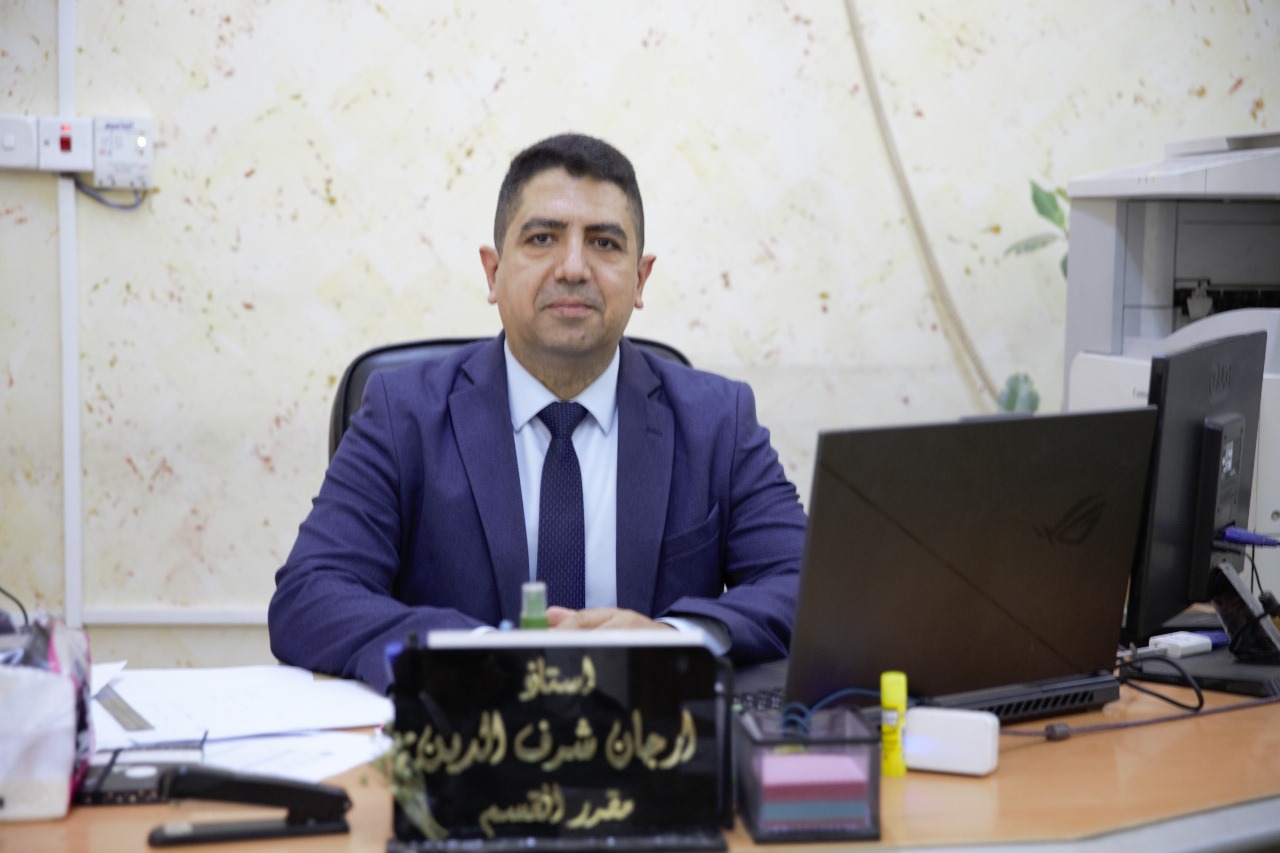
I graduated from Kirkuk Technical College with a bachelor’s degree in surveying engineering and then I obtained a master’s degree from Selcuk University in Turkey from the Faculty of Engineering/Department of Geodesy and Photogrammetry. I am currently a lecturer in the Surveying Engineering Dept. and my position is the department’s rapporteur.
Languages
Turkish (90%)
English (80%)
Arabic (100%)
Kurdish (70%)
Skills
Lecturer and Trainer (80%)
Academic Researcher (60%)
Communication Skills (95%)
Managing Skills (75%)
Microsoft Office (80%)
Academic Qualification
Master Degree
Sep 15, 2010 - Apr 30, 2013I`m graduated from Surveying Eng. Dept. in Selcuk University and get the Master degree
Bachelor Degree
Sep 1, 2001 - Sep 1, 2005I`m graduated from Technical college of kirkuk from the Surveying Eng. Dept. and get Bachelor degree
Working Experience
Department rapporteur/ Coordinator [Department rapporteur/ Coordinator]
Feb 20, 2023 - PresentDepartment rapporteur/ Coordinator
Faculty Member and teaching assistant [Faculty Member and teaching assistant]
Sep 1, 2019 - PresentFaculty Member and teaching assistant 2019-2023
External Lecturer [External Lecturer]
Dec 7, 2014 - Sep 12, 2019External Lecturer 2014-2019
Accountant and Translator [Accountant and Translator]
May 1, 2015 - Sep 1, 2019Accountant and Translator in foreign trade dept. in Mohammed Arborteum 2015-2019 (Kirkuk)
Surveying Engineer and Site manager [Surveying Engineer and Site manager]
Aug 15, 2013 - Sep 1, 2014Surveying Engineer and Site manager in Vins Company and construction 2013-2014 (Duhok/Amedi- Sulaimaniyah/Kalar)
Publications
An Integration of Remote Sensing and GIS Based on Multi-Criteria Decision Making for the Selection of Lands Suitable for Wind Energy Harvesting
Oct 1, 2025Journal Engineering, Technology and Applied Science Research
publisher PUBETA
DOI Floodplain Inundation Mapping And Flood Risk Assessment
Issue 5
Volume 15
The renewable energy demand has increased the need to develop efficient methods for assessing suitable land for wind energy installations. This study aims to evaluate the suitability of land in Kirkuk City for wind energy projects by combining multi-criteria decision analysis with remote sensing and Geographical Information Systems (GIS). Various environmental factors, along with topographical features and infrastructure, were integrated using the Analytic Hierarchy Process (AHP) to classify the land into areas of different suitability levels. The region analyzed includes 61.77 km² of highly suitable land, 123.152 km² of moderately suitable land, and 46.807 km² of the least suitable land. The northeastern quadrant of Kirkuk City contains Site 1, with 12 km² of highly suitable land, while Site 2 at the southeastern edge of the city covers 9 km² of highly suitable land. It has been found that the wind power projects can be developed in specific regions, but sustainable development and environmental conservation remain essential. The combination of GIS and remote sensing technologies enhances the energy infrastructure development, enabling more informed decision-making.
Exploring The Potential Of Latest Fused Techniques For Floodplain Inundation Mapping And Flood Risk Assessment
Jul 4, 2025Journal International Journal of Environmental Sciences
DOI Floodplain Inundation Mapping And Flood Risk Assessment
Volume 11
The costs attributed to floodplain in urban areas are high and should be anticipated by experts to avoid these incidences. As cities grow, there is a constant pressure to develop land. Floodplains, unfortunately, are often seen as cheap and readily available space. This puts buildings and infrastructure directly in the path of floodwaters. When floods hit urban areas, the damage can be immense. Homes, businesses, and critical infrastructure can all be submerged, costing billions of dollars in repairs. Additionally, there are human costs: displacement, injuries, and even fatalities. Therefore, remote sensing (RS) tools offer valuable methodology to foresee the Floodplain Inundation areas in urban cities and can be utilized in mapping the risky areas that exposed to severe floods. Thereby is now imperative to investigate the possibilities of RS for flood mapping and how to develop an urban flood risk assessment using techniques based on RS. This research aims to find out the latest works in Floodplain Inundation Mapping and Flood Risk Assessment using RS tools. The review emphasized the importance of integrating more than tools to overcome the drawbacks and increase the accuracy of the flood monitoring that leads the decision-makers make a proper commitment to avoid the costs related to floods. The current research supports the precise tools to enhance devices’ ability to absorb or predict the upcoming events in the future.