
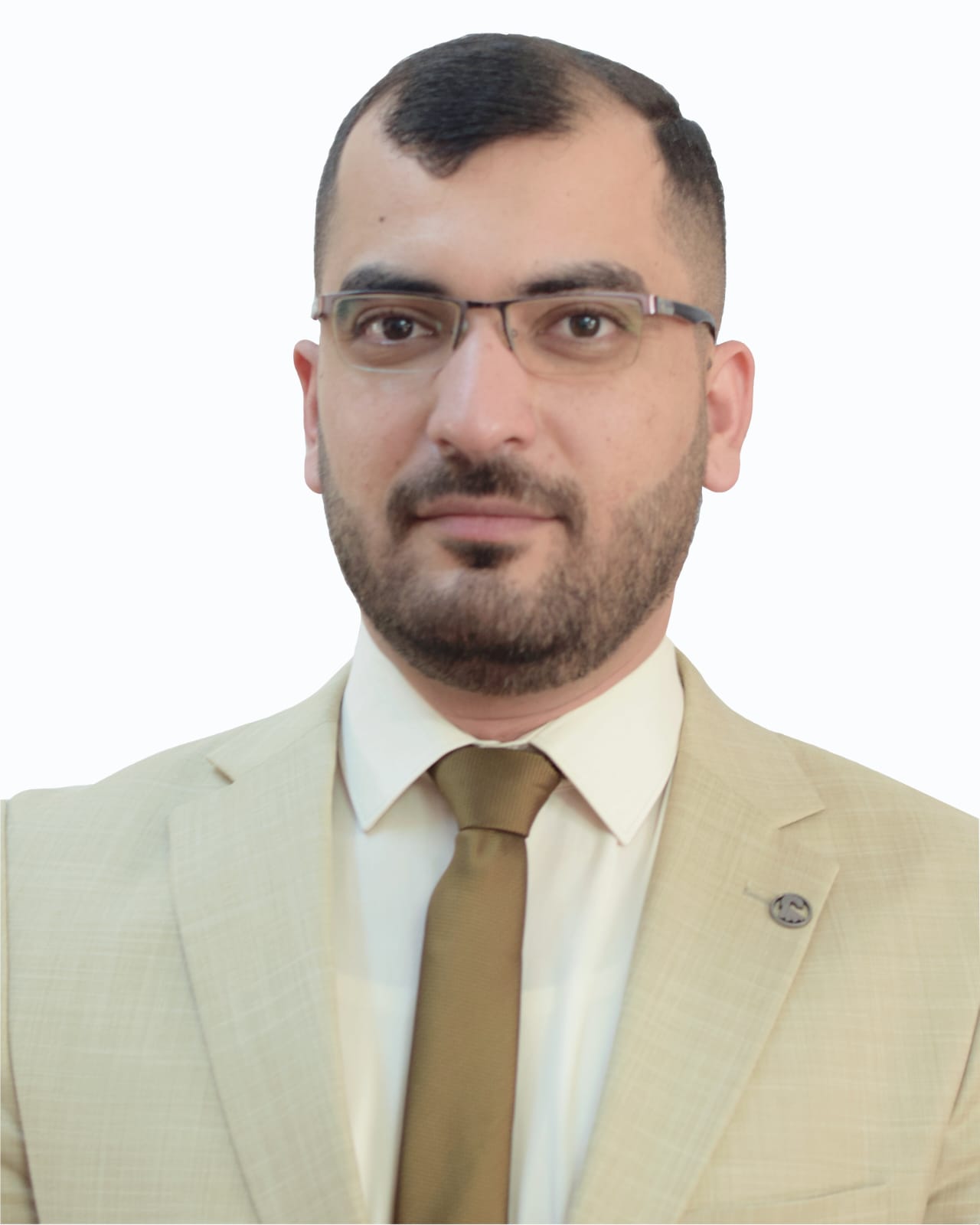
Sedeem Salih
Research InterestsClinical biochemistry
pharmaceutical science
| Gender | MALE |
|---|---|
| Place of Work | Dour Technical Institute |
| Department | Department of Pharmacy Technology |
| Position | No |
| Qualification | Master |
| Speciality | Clinical biochemistry |
| Sedeem.zeki@ntu.edu.iq | |
| Phone | 07719981887 |
| Address | Salah aldin / adour, Salah adin, Adour, Iraq |











Sedeem zeki salih an Assistant Lecturer at the Northern Technical University, Adour Technical Institute. He holds a Bachelor’s degree in Pharmaceutical Science (2010) and a Master’s degree in Clinical Biochemistry (2022). With a strong background in both pharmaceutical practice and biomedical research, He combines scientific expertise with a passion for advancing medical education and laboratory science.
In 2025, He transitioned from the Ministry of Health to the Ministry of Higher Education and Scientific Research, joining the Northern Technical University to pursue his growing interest in academia and research. His professional focus centers on clinical biochemistry, pharmaceutical education, and the integration of scientific inquiry into healthcare development.
Driven by curiosity and dedication, He aims to contribute to the advancement of biomedical research and inspire the next generation of healthcare professionals through teaching and innovation.
Skills
English language (85%)
Pharmaceutical Science: Drug formulation principles, pharmacology, and quality assurance (90%)
Clinical Biochemistry: Laboratory diagnostics, biochemical analysis, interpretation of clinical data (90%)
Academic Qualification
Bachelor in pharmaceutical science
Sep 21, 2005 - Jul 22, 2010Tikrit university college of pharmacy
Msc clinical biochemistry
Sep 22, 2019 - Sep 29, 2022Tikrit university college of medicine
Publications
Irisin Level in Salah Adin’s Insulin Resistance Syndrome Patients in View of Global Controversy
Aug 5, 2022Journal Pakistan Journal of Medical & Health
Issue 16
Volume 6
Metabolic syndrome (high blood pressure, hyperglycemia, dyslipidemia, and obesity) is now an international health problem that impacts about 20 per cent to 25 per cent of the total population and can be worsened in the developing world, particularly in the Middle East, which is roughly two out of every five Iraqis.