

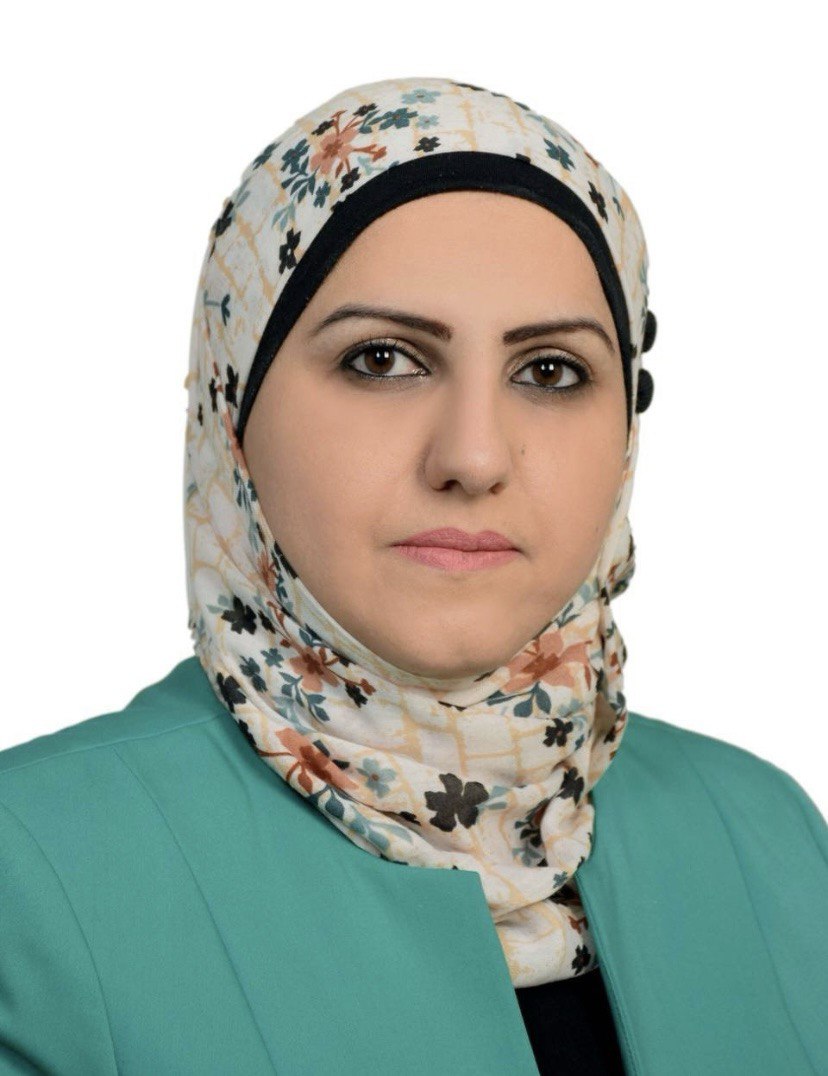
Marwa Riyadh
Research InterestsData Processing
| Gender | FEMALE |
|---|---|
| Place of Work | Technical Engineering College for Computer and AI / Mosul |
| Department | Department of Artificial Intelligence Engineering Techniques |
| Position | Lecturer |
| Qualification | M.S. |
| Speciality | Computer Engineering Technologies / Data Processing |
| Marwa.riyadh@ntu.edu.iq | |
| Phone | ... |
| Address | Mosul, Mosul, Nineveh, Iraq |



Working Experience
Assistant Lecturer, Department of Artificial Intelligence Engineering [Lecturer]
Oct 1, 2019 - PresentDelivering lectures, conducting practical sessions, and supervising student projects.
Publications
Deep Learning in Medical Imaging: A Comprehensive Review of Techniques, Challenges, and Future Directions
Dec 3, 2025Journal Open Access Library Journal
DOI DOI: 10.4236/oalib.1114497
Issue ISSN Online: 2333-9721
Deep learning has come to be one of the most transformative generations in current clinical imaging, imparting advanced answers for diagnosis, segmentation, and sickness class. This complete evaluation explores the most essential deep learning architectures—inclusive of convolutional neural networks (CNNs), recurrent neural networks (RNNs), and deep perception networks (DBNs)—and their packages in the course of diverse imaging modalities, such as CT, MRI, PET, and fundus images. The examine highlights how deep studying complements accuracy, overall performance, and automation in scientific photograph interpretation. Moreover, it discusses the cutting-edge annoying conditions handling these structures, at the side of confined categorized information, immoderate computational needs, and the shortage of interpretability. The compare concludes with future commands emphasizing explainable AI, hybrid models, records augmentation, and federated analyzing as pathways to triumph over present boundaries and enhance real-international scientific packages.
A Review of Artificial Intelligence Techniques for Medical Image Enhancement
Jun 15, 2025Journal International Journal of Computational and Electronic Aspects in Engineering
Medical imaging plays a crucial role in diagnosis, treatment planning, and monitoring of diseases. However, the quality of medical images is often compromised due to noise, low resolution, and artifacts. Recent advancements in Artificial Intelligence (AI), particularly deep learning techniques, have significantly improved image enhancement capabilities in the medical domain. This paper comprehensively reviews AI-based image enhancement methods applied to medical imaging. We discuss various enhancement techniques, including denoising, superresolution, contrast enhancement, and artifact removal. Additionally, we provide an overview of commonly used datasets, evaluation metrics, and recent developments in AI models such as convolutional neural networks (CNNs), generative adversarial networks (GANs), and transformer-based architectures. Finally, we highlight current challenges.
A Review of Artificial Intelligence Techniques for Medical Image Enhancement
Jun 15, 2025Journal International Journal of Computational and Electronic Aspects in Engineering
Medical imaging plays a crucial role in diagnosis, treatment planning, and monitoring of diseases. However, the quality of medical images is often compromised due to noise, low resolution, and artifacts. Recent advancements in Artificial Intelligence (AI), particularly deep learning techniques, have significantly improved image enhancement capabilities in the medical domain. This paper comprehensively reviews AI-based image enhancement methods applied to medical imaging. We discuss various enhancement techniques, including denoising, superresolution, contrast enhancement, and artifact removal. Additionally, we provide an overview of commonly used datasets, evaluation metrics, and recent developments in AI models such as convolutional neural networks (CNNs), generative adversarial networks (GANs), and transformer-based architectures. Finally, we highlight current challenges.
Testing real-time system algorithms performance on synthetic Data: Analytical study of hard and soft system tasks
May 7, 2025Journal Edelweiss Applied Science and Technology
publisher Learning Gate
DOI 10.55214/25768484.v9i5.6956
Issue 2576-8484
Volume Vol. 9, No. 5, 607-614
This study compares RMS, EDF, and LLF on synthetic datasets for hard and soft real-time systems to assess their feasibility and effectiveness in supporting real-time systems for various utilization levels. It has been designed to give each algorithm's various strengths, limits, and applicability in real-time application scenarios through total utilization computation and schedule-up-to-do ability analysis. It has been concluded that RMS is not schedulable due to its overutilization, while EDF is infeasible at Total > 1.0 for hard and soft real-time. LLF has limitations due to overutilization and frequent preemptions, making it suitable for soft real-time systems, unlike hard systems, because of the limitations of overutilization and frequent preemptions. RMS and EDF cannot meet deadlines under hard and soft real-time conditions. Future work should focus on hybrid algorithms or load balancing to overcome these limitations and process data in real time without tasks going beyond the time available to them in the CPU.
New Novel FPGA Based Image Encryption Methods Using Multiple Chaotic Maps
Mar 26, 2025Journal 2024 International Conference on Computer and Applications (ICCA)
publisher IEEE
In the digital era, the security of information has become paramount, particularly in the realm of image data transmission. Encryption is the process of encoding information to prevent unauthorized access and plays a crucial role in ensuring this security. The two proposed methodologies employ four distinct Chaos Pseudo Random Bit Generators (PRBGs): the Lozi map, Tent map, Logistic map, and Quad map. The image is divided into four segments, each encrypted using one of the PRBGs, enhancing the complexity and security of the encrypted image. The randomness of the generated cryptographic keys using the National Institute of Standards and Technology (NIST), which is a Statistical Test Suite for test Pseudorandom Number Generators for Cryptographic Applications. The encryption scheme was implemented on a Field Programmable Gate Array (FPGA) ZYNQ702 evaluation board kit, The results demonstrated a significant improvement in the NIST's A Statistical Test Suite outcome compared to existing methods, underscoring the superior performance of the proposed encryption technique. This research proposed two systems with comparative study and contributes to the field of image encryption by offering more secure effective methods, thereby paving the way for safer image data transmission utilize FPGA with 667 MHZ frequency and 5.3 Gbps throughput.
Analysis Equalization Images Contrast Enhancement and Performance Measurement
Apr 29, 2024Journal Open Access Library Journal
publisher http://creativecommons.org/licenses/by/4.0/
Issue ISSN Online: 2333-9721 ISSN Print: 2333-9705
Volume 2024, Volume 11, e11388
These days, image processing is crucial, particularly when it comes to enhancing brightness, contrast, and image quality. The goal of this research is to develop three distinct methods for manipulating images and evaluating them using histogram, entropy, and PSNR—two image-specific metrics. Frame Fusion produces excellent results in image contrast, brightness, and enhancement through the standards of PSNR, histogram, and entropy. In comparison to its competitors, the technology performed better in terms of high pixel uniformity in images, consistency efficiency, processing and execution speed, and contrast quality. The aforementioned findings lead us to the conclusion that exposure frame fusion technology is highly effective at figuring out how to improve the contrast and brightness of computer images. Three image processing techniques were used: exposure frame fusion, dynamic histogram equalization, and histogram equalization. A comparison of the techniques using quantitative and physical criteria revealed that histogram equalization outperformed dynamic contrast techniques in several areas, including image uniformity, contrast quality, efficiency, execution speed, and accuracy of results. It is advised to use exposure frame fusion in addition to histogram equalization since it is the brightest, clearest, and most like the original images.
FPGA-Based Three Edge Detection Algorithms (Sobel, Prewitt and Roberts) Implementation for Image Processing
Feb 19, 2024publisher Przeglad Elektrotechniczny
This technique aims to identify bone boundaries and fractures in noisy images by leveraging information from X-ray images. The computer-aided bone fracture detection method is primarily designed to help doctors generate improved diagnostic reports. Identifying accurate boundaries in noisy images remains challenging. Image processing algorithms have been limited to slow software implementations due to restricted processor speeds, necessitating a dedicated processor for edge detection. The Spartan3E-XC3S1600 FPGA kit will be employed to construct a fast architecture capable of performing edge detection using Sobel, Prewitt and Roberts edge detection systems.
3D Stereo Rendering Using FPGA
Apr 30, 2019Journal Computer Engineering and Intelligent Systems
publisher http://www.iiste.org
DOI 10.7176/CEIS
Issue ISSN 2222-1719 (Paper) ISSN 2222-2863 (Online)
Volume Vol.10, No.3, 2019
Stereo rendering presents a virtual 3D scene from two slightly different vantage points. It is of great importance in the field of machine vision, robotics and image analysis. This paper proposes a stereo vision system that is realized in a single field programmable gate array (FPGA). Calculations of the stereo pairs are made by using twocenter projection (off-axis) method. The first red resultant image is for left eye while the second blue one is for right eye; the 3D illusion is produced when looking to them using anaglyph. This computer graphic hardware system is implemented using Spartan3E XC3S500E FPGA kit. The execution time for the proposal is 1266 faster than OpenGL time with maximum operating frequency of 35.417 MHz, while the max occupation area reaches 84%
Conferences
New Novel FPGA Based Image Encryption Methods Using Multiple Chaotic Maps
Dec 17, 2024 - Dec 19, 2024Publisher IEEE
DOI 10.1109/ICCA62237.2024.10927935
Country
Location